Breeding Projects
At Cornwall Beetles we are passionate about creating healthy breeding stock of our species and sharing our methods with fellow breeders. We work together with other breeders and local businesses to share knowledge and best practice so that more people can enjoy beetle breeding without needing to rely on wild caught insects.

Anthia sexmaculata
A fantastically active beetle that hunts live insects. Breeding these in captivity is a huge challenge and we are not aware of anyone yet doing so, but we are making excellent progress. They require an ants nest in order to lay eggs, so we are testing two different species across three separate nests.

Protaetia speciosa jousselini
This is a fairly easy beetle to rear in captivity. The larvae require a three month winter diapause in order to maximise egg laying when adults. This should consist of gradual temperature changes with 2 weeks at 12-15 degrees, 2 months at 6-10 degrees and then another 2 weeks at 12-15 degrees. Diapause should start when the L3 larvae have turned yellow.

Plaesiorhinella watkinsiana
A slightly more complicated species to breed as the adults require a heavily organic compost substrate in order to oviposit. We use a mix of our own 4 year old compost and oak leaf litter. This season we have gained 54 healthy captive bred larvae. Pupation is likely to require a sandier substrate.

Protaetia speciosa cyanochlora
This is a fairly easy beetle to rear in captivity. The larvae require a three month winter diapause in order to maximise egg laying when adults. The diapause requirements are the same as for Jousselini. Under different lights these beetles can range from deep blue to bright green.

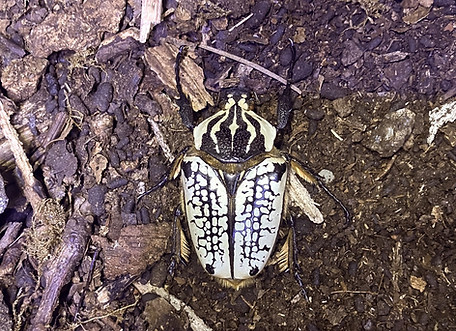
Mecynorhina torquata ugandensis
One of the most popular beetles in the breeding hobby. These are quick and easy to rear and their genetics offer the opportunity for selective breeding to achieve desired colours. We currently have blue, black, brown, green and fully blue breeding lines. Larvae can eat oak leaf mulch or flake soil.


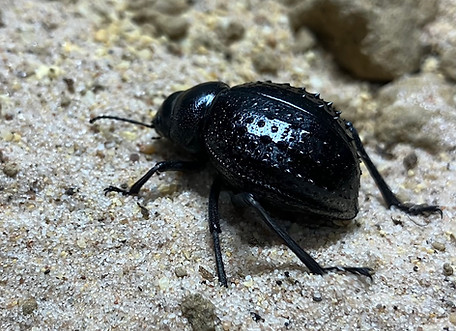
Asbolus verrucosus
Blue Death Feigning Beetles are an excellent and very easy beetle to keep due to their simple diet, barren dry terrariums and long lifespan. Contrary to popular beliefs this species require a high-protein, low-sugar diet of freshly killed inverts. Fruit and vegetables are not suitable as regular food.